

How To Repair Leather Furniture From Cat Scratches
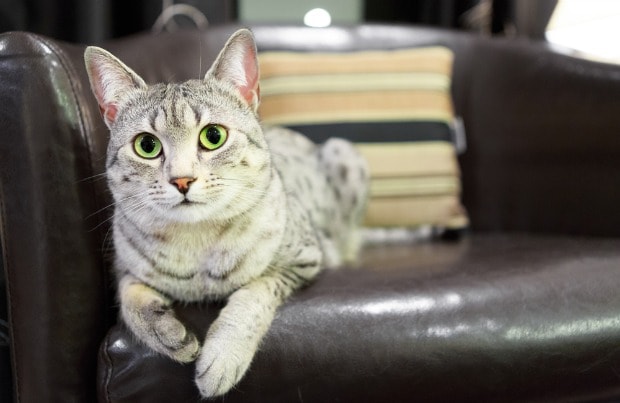
How to Fix True cat Scratches on Leather Furniture
Unless kitty is constantly wearing smash tips, cats and leather typically don't mix. If your feline has fabricated your expensive article of furniture into her scratching post, it may not be completely beyond repair. Try to relieve your leather chair or sofa with some tips from the experts.
What You lot'll Demand
- Leather cleaner
- Scissors
- Sponge
- Paintbrush
- Leather bounden glue
- Sandpaper
- Leather putty
- Leather colorant
- Leather sealant
- Leather finish
Fixing Impairment Caused by True cat Kneading
Non all cat scratch impairment is created equal. The area of furniture that Fluffy has clawed will determine your all-time arroyo to the prepare. If kitty is on her hind legs and digging her nails into the sides of the chair or sofa, role of her claw action involves extending and retracting her talons. By doing so, says Harry Kahn of Expert Leather Intendance in Fort Lauderdale, Fla., Kitty is essentially plucking out the hairs (also called fibers) from the leather. The result is an area that looks like a pilled-upwards sweater, with little thread balls roughening upward the surface.
Fixing Cat Scratches on Furniture
- Prepare the damaged surface area by thoroughly cleaning any grime or dirt off with a cleaning product specifically designed for cleaning leather. Any professional leather care service can recommend a quality brand, often sold in their stores.
- Trim the loose fibers by clipping with scissors as close to the base of the pilling every bit possible, existence careful non to cut, puncture or cause further damage. Whatsoever shorter hairs left behind will not touch the feel and look of the finish result, nor the quality of the repair.
- Use glue specifically made for binding leather by putting a small corporeality onto a sponge and rubbing it right into the damaged area. Allow time for the starting time glaze to dry out, and re-apply vii to 9 times (with sufficient drying fourth dimension between each application) to ensure a long-lasting, stiff repair.
- Utilise fine sandpaper (1200 grit) to lightly smooth the area treated with the leather glue. Take your time and use a gentle touch to avoid roughing upwards the repair. A proper sanding job will produce an fifty-fifty, smooth surface to provide the base for the rest of the repair process.
- Remove any sandpaper residual to prepare for the heavy filler, a sort of leather putty, awarding. Using a palette knife, spread the filler in a sparse layer on top of the scratches. Permit the filler to dry out for xx to 25 minutes, inspect your piece of work, and reapply an additional layer if needed to fill in gouges, deep scratches, and holes.
- One time the heavy filler has dried, take your sandpaper out again and smooth out the repaired area. Afterwards it's sufficiently sanded, wipe down the leather with the special leather cleaning solution to remove any sandpaper residue or dirt. The repaired surface area must be clean in order for the colorant to adhere to the leather.
- After the leather cleaner has dried, put a pocket-sized corporeality of the colorant on a fresh, clean sponge and apply a thin layer to the repaired surface area. Besides putting the color back into your leather, sometimes information technology also reveals spots that need some extra repair. If and so, reapply more filler, sand it downwardly after it has stale, and reapply the colorant over again.
- Once the first glaze of colorant has been applied and dried, a spray-on colorant that comes with an airbrush should be swept over your repair in unmarried layers. Let each application dry before applying the side by side. Apply as many sparse layers of colorant every bit needed to completely blend in the repaired area with the intact area and to hide the repair.
- Apply leather lacquer (as well called leather sealant) to seal the color in and forbid rub-off or fading. Using a make clean sponge or airbrush, apply the sealant in 3 or iv layers to enhance the repaired leather'due south flexibility and sturdiness. Let each layer dry thoroughly before applying the next.
- The final pace is to apply a leather terminate product, once again in thin layers with sufficient drying time in betwixt each one. The finish should be practical with an airbrush or clean sponge in 4 to 5 layers. This seals in the work you've done and protects it from ordinary wear, but unfortunately, your true cat'southward nails can ruin information technology again.
Fixing Impairment Caused past Swiping
Repairing damage done past kitty scratching across the surface of your leather, rather than kneading it with her claws, is a much simpler, quicker procedure. Provided the scratches are strictly on the surface and take not cut the leather apart, the lighter shade of discoloration can be hidden with a leather re-coloring balm. But apply the balm to hide the scratches and alloy it in with the remainder of the leather on the piece. Kahn advises that if the scratches have cut through the leather, no do-it-yourself fix volition exist acceptable; it's best left to the professionals.
Although the repair process is long and deadening, your leather can be restored and so well that only you lot and Kitty know about the damage.
Image: Sarah Fields Photography via Shutterstock.
Valerie Trumps

Source: https://be.chewy.com/pet-parenting-diy-recipes-how-to-fix-cat-scratches-on-leather/
Posted by: watershasked.blogspot.com
0 Response to "How To Repair Leather Furniture From Cat Scratches"
Post a Comment